Banner for Monday Morning in Washington, DC


Volume 08 Issue 21 May 26, 2008

Welcome to Monday Morning in Washington, D.C., published weekly by The Arc of the United States. We will bring to you news of interest to self advocates and their families, volunteers, professionals, and supporters of the disability movement. Please send any comments to mmwdc@thearc.org. You are welcome to reproduce and distribute items from Monday Morning in Washington, D.C., but please credit Monday Morning in Washington, D.C. (The Arc of the United States, 2007).

The Arc of the United States advocates for the rights and full participation of all children and adults with intellectual and developmental disabilities. Together with our network of members and affiliated chapters, we improve systems of supports and services; connect families; inspire communities; and influence public policy.

[NOTE: Having trouble reading this newsletter? Read it online.] [Past Issues]

IN THIS ISSUE:

[nectac-enotes] NECTAC eNotes - May 23, 2008

Current and past issues of eNotes can be viewed online at http://www.nectac.org/enotes/enotes.asp

In this Issue

  1. New on U.S. Department of Education's "Doing What Works" Web Site - Early Childhood Language and Literacy
    Source: U.S. Department of Education - May 19, 2008
  2. Request for Comments - Family Educational Rights and Privacy Act Regulatory Requirements
    Source: U.S. Department of Education - May 19, 2008
  3. Panel Discussion on Enacting Effective School-Readiness Policies and Programs
    Source: The Urban Institute - May 20, 2008
  4. New "On the Go" Early Literacy Materials Available
    Source: Washington Learning Systems - May 20, 2008
  5. A Thinking Guide to Inclusive Childcare
    Source: Disability Rights of Wisconsin - Retrieved May 22, 2008

National Down Syndrome Society
Scholarship program for students with Down syndrome

The Joshua O’Neill and Zeshan Tabani Enrichment Fund

The Joshua O’Neill and Zeshan Tabani Enrichment Fund offers financial assistance to young adults with Down syndrome who wish to continue to enrich their lives by enrolling in postsecondary programs or taking enrichment classes that will help them to enrich life through employment, independent living skills, life skills or another way. Up to five (5) grants will be awarded, each grant not to exceed $1000, and the grant may be used to pay for the tuition for a course or postsecondary program at a local college, educational institution, learning center or employment training program. 

The deadline for the 2008 applications is July 18, 2008.  This fund is administered by the National Down Syndrome Society and more information about the program, including the application, can be found at: http://www1.ndss.org/index.php?option=com_content&task=view&id=1973&Itemid=236.

For more information, please contact Erin Geller at egeller@ndss.org  

Champions for Inclusive Communities

Newsletter Edition: May 20, 2008 - http://www.championsinc.org/newsletter/archives/2008_05_20_Newsletter.htm

Siblings and Autism Anthology

Seeking submissions of essays for anthology exploring the dynamic of growing up/aging with a sibling who has autism. We seek essays that span generations, cultures, and ethnicities. Send essays to: Deb Cumberland, English Dept., Winona State University,Winona, MN 55987, USA or  Bruce Mills,English Dept., Kalamazoo College, Kalamazoo,MI  49006, USA For inquiries, email dcumberland@winona.edu or bmills@kzoo.edu. Send submissions with a SASE by September 15th 2008.

Family Voices of North Dakota E-News WEek of May 19th
Family Care Navigator

Family Care Navigator is an EXCELLENT TOOL for Family and Informal Caregivers as well as Professional Caregivers. This new tool provides state specific resources and suggestions for a variety of issues pertinent to challenges of caregiving. 
http://caregiver.org/caregiver/jsp/fcn_content_node.jsp?nodeid=2083

Disability Rights Washington Website - new information about the Ashley Treatment investigation

Disability Rights Washington, the Washington State Protection and Advocacy System, has recently updated its website to include new information about the Ashley Treatment investigation.  The term “Ashley treatment” was created after parents in the Seattle, Washington area, along with the local Children’s Hospital, engaged in growth attenuation therapy and the removal of sex organs and breast tissue of a young girl with significant cognitive and physical disability.  The parents, who remain anonymous, refer to their child as their “pillow angel” and hoped these procedures would help keep her physically small and child-like to ease what they described as the growing burden of physical care.  The updated material on Disability Rights Washington’s website responds to numerous requests for information about ways hospitals can help protect the rights of people with disabilities.  See: http://www.disabilityrightswa.org/news-1/ashley-treatment-investigation

NIH/NIMH Public Meeting of Interagency Autism Coordinating Committee

The National Institutes of Health and the National Institute of Mental Health is holding a public meeting of the Interagency Autism Coordinating Committee (IACC) to discuss agency updates, reports from subcommittees and work group recommendations for an IACC plan for research and review of recent advances. Contact: Tanya Pryor at 301-443-7153 or pryort@mail.nih.gov.  For more information, see: www.nimh.nih.gov/research-funding/scientific-meetings/recurring-meetings/iacc/events/index.shtml

Better Hearing and Speech Month

To recognize Better Hearing and Speech Month, CDC has developed feature articles and podcasts in English and Spanish about newborn hearing screening that we encourage you to share with your partners, colleagues, and friends. Read the English version of the feature article at http://www.cdc.gov/Features/NewbornHearing/. Listen to the podcast in English at http://www2a.cdc.gov/podcasts/player.asp?f=5834. If you need the Spanish version contact FVND

YOUTH AND DISABILITY DISCLOSURE: THE ROLE OF FAMILIES AND ADVOCATES

This info brief highlights NCWD/Youth's The 411 on Disability Disclosure and explores the role families and advocates play in helping youth understand the importance of appropriate disability disclosure. To review this document, go to http://www.ncwd-youth.info/resources_&_Publications/information_Briefs/issue21.html

VOCATIONAL ASSESSMENT AND ITS ROLE IN CAREER PLANNING

This info brief discusses career planning and vocational assessment for transition-age youth. It focuses on the vocational domain and how assessment activities support career related activities. To review this document go to http://www.ncwd-youth.info/resources_&_Publications/information_Briefs/issue20.html  

Parent’s Checklist for Good Dental Health Practices in Child Care

The National Resource Center for Health and Safety in Child Care and Early Education (NRC) has created a one-page Parent’s Checklist for Good Dental Health Practices in Child Care that you can use in your work to help influence the quality of dental practices in child care. The checklist encourages parents to look at the dental practices their young children are experiencing in child care/early education settings. The ADA Harris Foundation supported NRC’s development of the handout. http://nrc.uchsc.edu/dentalchecklist.pdf

Providing Early Childhood Mental Health Services that Meet the Needs of Young Children and Their Caregivers: Building the Evidence Base

The National Technical Assistance Center for Children's Mental Health offers a range of training and technical assistance activities. This presentation was held on April 17, 2008. The recording, PowerPoint presentations, and reading materials for this call are available on their Web site - http://gucchd.georgetown.edu/programs/ta_center/tacalls2008.html

The U. S. Department of Education has developed a publication, Empowering Parents School Box.

The school box contains three booklets: What Parents Need to Know, Taking a Closer Look, and Learning Checklists; a brochure: Examples of Resources; a poster: Empowered Parents Stay Involved With School; a bookmark; and a door hanger. The school box provides: tips on working with children from birth to high school; guidelines for taking advantage of free tutoring opportunities; steps for selecting a high-quality school; ways to get involved in children's schools; information about financial aid and scholarships; and resources for improving learning. It also includes success stories of schools where parent involvement made a difference. This item is available free from the U.S. Department of Education. To order go online to www.edpubs.org or call 1-877-4ED-PUBS (Order number ED003651K).

The Heath Resource Center
Report-Teachers under prepared for diversity and SpEd students

Issue No. 3-Teaching in Changing Times: Diverse Classrooms Challenge New Teachers' Skills |Jonathan Rochkind, Amber Ott, John Immerwahr, John Doble and Jean Johnson | Public Agenda report | The third in our Lessons Learned series of reports on new teachers finds two specific areas in which teacher training may be lacking: preparedness for the diversity of the contemporary American classroom and teaching students with special needs. Seventy-six percent of new teachers said teaching an ethnically diverse student body was covered in their training, but only 39 percent said that training helps them a lot in the classroom. The survey covered twelve areas of teacher training ranging from direct instruction to their study of history, philosophy, and policy debates in public education. Lessons Learned is produced by Public Agenda and the National Comprehensive Center for Teacher Quality. http://www.publicagenda.org/lessonslearned3/

Special Needs Parent Toolkit-The DOD Special Needs Tool Kit

It is designed to help military families and others with special needs children navigate the maze of medical and special education services, community support and benefits and entitlements. The Toolkit is broken down into six colorful modules that can be easily downloaded and printed. The Toolkit can be found at http://www.militaryhomefront.dod.mil/portal/page/mhf/MHF/MHF_DETAIL_1?section_id=20.40.500.570.0.0.0.0.0&content_id=218947

JAN E-News, Volume 6, Issue 2, Second Quarter 2008

The latest JAN E-News is now available at: http://www.jan.wvu.edu/ENews/2008/Enews-V6-I2.htm

E-News topics include:

  1. Neil Romano: Taking the Helm as ODEP's Assistant Secretary
  2. U.S. BLN Annual Conference – JAN SuperTrack
  3. May is Mental Health Awareness Month
  4. Depression in the Workplace
  5. May is Arthritis Awareness Month
  6. 2008 CSUN Conference
  7. JAN Exhibit and Training Schedule
  8. JAN Spanish Services
  9. Contact JAN - E-mail: jan@jan.wvu.edu
    JAN Web site: http://www.jan.wvu.edu - Small Business and Self-Employment Service: http://www.jan.wvu.edu/sbses/

REFERENCE POINTS:
Conference and Workshop Updates Added to the TATRA Website

REFERENCE POINTS is an activity of TATRA, a project of PACER Center

REFERENCE POINTS Conference and workshop updates feature NEW additions to the listing of transition related national and regional conferences maintained on PACER Center's TATRA Project web site. To see our complete calendar of events, please visit us at http://www.pacer.org/tatra/calendar.asp.

REFERENCE POINTS:
Funding Available for Center on Postsecondary Education for Students with Intellectual Disabilities

The purpose of this program from the U.S. Department of Education, is to undertake research, demonstration projects, training, and related activities to develop methods, procedures, and rehabilitation technology that maximizes the full inclusion and integration into society, employment, independent living, family support, and economic and social self-sufficiency of individuals with disabilities and to improve the effectiveness of services under the Rehabilitation Act of 1973. Program activities may include: research, training, demonstration, development, dissemination, and technical assistance. One award of up to $500,000 will be made. More information can be found at http://www.ed.gov/legislation/FedRegister/announcements/2008-2/042508a.html.  Deadline: June 4, 2008

REFERENCE POINTS: 
Mental Health Resources

MENTAL HEALTH MONTH: GET CONNECTED
May is Mental Health Month and was created more than 50 years ago to raise awareness about mental health conditions and the importance of mental wellness for all. This year's theme is focused on an essential component of maintaining and protecting mental health and wellness: social connectedness. The tagline for this year's observance is "Get Connected." For more information and resources go to http://www.mentalhealthamerica.net/go/may

FACTS FROM NLTS2: SUBSTANCE USE AMONG YOUNG ADULTS WITH DISABILITIES (MAY 2008)
This report was released by the National Center for Special Education Research (NCSER) and uses data from the National Longitudinal Transition Study-2 (NLTS2) to answer questions about the use of alcohol, cigarettes and illegal drugs such as marijuana, cocaine, and LSD among young adults with disabilities. The report compares substance use among this population with substance use in the general population, and compares different disability categories and demographic groups in substance use and in the receipt of substance abuse prevention education and services. The report can be viewed at  http://ies.ed.gov/whatsnew/

MENTAL HEALTH CASE STUDY REPORT: TRANSITIONING YOUTH WITH MENTAL HEALTH NEEDS TO MEANINGFUL EMPLOYMENT AND INDEPENDENT LIVING
NCWD/Youth, with funding from the Office of Disability Employment Policy (ODEP) of the U.S. Department of Labor, carried out a study on successful strategies to help youth with mental health needs transition to postsecondary education, employment, and independent lives. The study focuses primarily on the role of skills development, work, and career exploration. It presents the findings from case studies of five promising program sites and identifies program design features and system-level policies that appear to help youth and young adults with mental health needs better transition into adulthood and life-long success.

http://www.ncwd-youth.info/resources_&_Publications/background.php#mental_health_case_study_report

DEPRESSION HITS NEARLY 10 PERCENT OF TEENS:
More than 2 million American teens - 12.7 percent of girls and 4.6 percent of boys, or 8.5 percent of all teens -- report that they had serious bouts of depression during the past year, a federal report indicates. Nearly half of the teenagers who had major depression said it severely impaired their ability to function on a disability scale, which measures impact on family, friends, chores at home, work and school.  This article from the online version of Reuters on 5/13/08 can be found at http://www.reuters.com/article/healthNews/idUSN1340857020080513?pageNumber=1&virtualBrandChannel=0&sp=true

RESEARCHING THE HIGH RATE OF LATINA TEEN SUICIDES
A new research model will attempt to discover why one in five U.S.-born teenage Latinas attempt suicide.
http://news-info.wustl.edu/tips/page/normal/6681.html

INHALANTS ARE A DRUG OF CHOICE FOR YOUNGEST USERS
Many 12 year-olds in the "tween" generation, yearning to become teenagers, are already using illicit drugs. Their drug of choice is inhalants. This is the conclusion of a new report by HHS' Substance Abuse and Mental Health Services Administration (SAMHSA), recently revealed at a press conference by the National Inhalant Prevention Coalition (NIPC) to kick off the 16th annual National Inhalants & Poisons Awareness Week (NIPAW). The data show that 3.4 percent of 12 year-old children used inhalants in the past 12 months, outpacing use of marijuana (1.1 percent) and misuse of prescription pain relievers (2.7 percent). But regardless of age of use, inhalants can cause "Sudden Sniffing Death" or lead to addiction and other health risks. For more information about this and other reports on inhalant use by youth go to http://oas.samhsa.gov/2k8/inhalants/press.htm

NCD Request for Applications for Research Opportunities

The application packages for two NCD research opportunities are now available.

The 2008 Housing Initiative package is available at: http://www.ncd.gov/research_opportunity/housing_application.html.

And, the Workforce Infrastructure in Support of People with Disabilities: Matching Human Resources to Service Needs package is available at: http://www.ncd.gov/research_opportunity/workforce_application.html.

MEDICARE ANNOUNCES OVER 320 WINNING SUPPLIERS SELECTED FOR COMPETITIVE BIDDING PROGRAM FOR DURABLE MEDICAL EQUIPMENT, PROSTHETICS, ORTHOTICS, AND SUPPLIES

New program saves money for beneficiaries and provides access to high quality products from community suppliers

The Centers for Medicare & Medicaid Services (CMS) released the names of the 325 suppliers that have signed contracts with Medicare to provide certain medical equipment and supplies to beneficiaries in 10 communities across the U.S. at significantly lower prices than they are paying now. 

The new competitive bidding program goes into effect on July 1, 2008, in 10 communities.  This program uses the local, competitive marketplace to lower the costs for certain durable medical equipment, prosthetics, orthotics and supplies (DMEPOS) for Medicare beneficiaries who use Medicare-contracted suppliers to obtain medical items and supplies.  Because beneficiaries pay 20 percent coinsurance on the cost of DMEPOS, they will directly benefit from the savings.

Consumers, physicians and other providers can find a list of Medicare contract suppliers in the 10 initial areas of the program by visiting www.medicare.gov (under “Search Tools” select “Find Suppliers of Medical Equipment in Your Area) or by calling 1-800-MEDICARE (TTY users should call 1-877-486-2048).  People can also visit the local offices of the various partner groups, such as their State Health Insurance and Assistance Program, Area Office on Aging and a number of community organizations that can provide information on the program.

CMS today also announced that it is extending the deadline for suppliers in the 70 second round metropolitan statistical areas (MSAs) to become accredited.  CMS is extending the deadline because a significant number of suppliers in those communities have not yet applied for accreditation.

Additional information on the DMEPOS competitive bidding program is available at www.cms.hhs.gov/DMEPOSCompetitiveBid.To read the entire CMS Press release issued today please go here: http://www.cms.hhs.gov/apps/media/press_releases.asp Also, CMS has issued a Fact Sheet located here: http://www.cms.hhs.gov/apps/media/fact_sheets.asp  The list of contract suppliers is now available on www.dmecompetitivebid.com/cs .

Payment for Complex Rehabilitative Power Mobility Device Services that Span the Implementation Date of Durable Medical Equipment, Prosthetics, Orthotics, and Supplies (DMEPOS) Competitive Bidding Programs in Competitive Bidding Areas  

CMS will be issuing instructions in the near future about a one-time DMEPOS competitive bidding transition policy for suppliers of purchased Group 3 single or multiple power option power mobility devices (PMDs) furnished to beneficiaries in competitive bidding areas (CBAs).  In specific cases described below, suppliers who, prior to July 1, 2008, begin furnishing services related to providing these devices, but do not deliver the final PMD product until July 1, 2008, or later will be paid based on the 2008 fee schedule amounts for furnishing these PMDs to beneficiaries residing in Round One CBAs.   This transition policy applies to both contract and noncontract suppliers.
 
The HCPCS codes subject to the transition policy include PMD codes K0856 thru K0864 and related accessories provided at the time the PMD is delivered to a beneficiary who resides in a Round One CBA.  The specific claims subject to the transition policy are items that are delivered for use in the beneficiary’s home on or after July 1, 2008, for which the supplier has:

This documentation should be maintained by the supplier, but does not need to be submitted at the time the claim for the PMD is submitted.  However, it should be made available upon request.

Suppliers should use the date of the physician order as the date of service on the claim (other than this limited, one-time exception, suppliers should be aware that the date of service that is recorded on a DMEPOS claim is the date that the item is delivered).  In addition, suppliers should include on the claim for the PMD all accessories provided with the PMD and should use the same date of service used for the PMD for these items.  Suppliers should report the date the PMD and related accessories were delivered for use in the beneficiary’s home in the narrative section of the claim.

For more information on the DMEPOS Competitive Bidding program, please visit www.cms.hhs.gov/DMEPOScompetitivebid

States "Miss" (i.e., Fail to Report or Protect) People In Nursing Facilities Who Are In Actual Harm or Immediate Jeopardy - Information Bulletin # 248 (5/08)

How can so many State officials "miss" seeing and reporting deficiencies in nursing homes, year in and out, that put people with disabilities and the elderly in "actual harm or immediate jeopardy"?  It should not be that difficult for States to inspect and monitor nursing facilities and to report accurately how these facilities are "treating" residents.  When States "miss" these deficiencies and therefore do not report them, the nursing facilities cannot be held accountable for failing to make corrections or improvements.

A recent U.S. Government Accountability Office report, "Federal Monitoring Surveys Demonstrate Continued Understatement of Serious Care Problems and CMS Oversight Weaknesses"( the eighteenth such GAO report since 1998), once again showed that nursing facilities apparently can do whatever harm they want to residents, and the State inspection officials, who are supposed to monitor these facilities and report deficiencies, ignore these wrongdoings and do not report extremely serious deficiencies.

Here's what GAO found:

During States' standard surveys, CMS reported that States did report that nationally 17.8% of the nursing facilities caused "actual harm" and/or put residents in "immediate jeopardy."  Let's remember, those were that percentage was only where a State health official actually affirmatively cited the nursing facility's deficiencies.

The GAO report's primary focus was, above and beyond the17.8% reported deficiencies. Rather, the GAO surveyed when States failed to cite the nursing facility - it "missed" citing and reporting deficiencies.  The GAO's report focused on deficiencies above and beyond the 17.8% b the"missed" deficiencies.

Nationally, 14.5% of the State surveys "missed at least one" deficiency of"actual harm or immediate jeopardy." Obviously, from residents' point of view, these are critical, life-threatening "misses." In the first list below, we provide by State the percentages of State surveys with "at least one" such "missed" deficiency.  (If the 17.8% of actually reported deficiencies and 14.5% of "missed" deficiencies were combined, it would more accurately show the total percentages of nursing facilities that caused "Actual Harm" or put residents in "Immediate Jeopardy.")

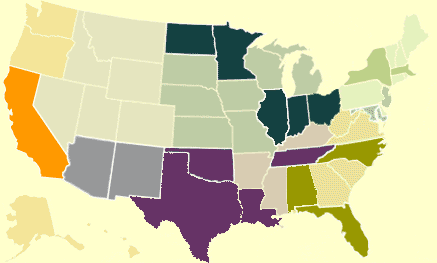
The GAO computed that 9 states (AL, AR, MO, NM, OK, SC, SD, TN and WY) "missed" these serious deficiencies on 25% or more surveys!

In addition to deficiencies regarding "actual harm or immediate jeopardy," 68.8% of State surveys "missed" other deficiencies that are classified as"potential for more than minimal harm."  The GAO correctly pointed out that these "undetected care problems ... could become more serious if nursing homes are not required to take corrective action."  Obviously, if State inspectors "miss" them and do not report them, then no corrective action will occur.

Incredibly, the most frequently "missed" deficiencies at the "potential for more than minimal harm" level included preventing pressure sores, hydration, ensuring proper nutrition and "poor quality of care."  Why are hydration or preventing pressure sores only at the "minimal harm" level? When do they move to "actual harm or immediate jeopardy" levels?  In the second list below, we provide by State the percentages of State surveys with "at least one missed" deficiency with "potential for more than minimal harm." Again, the 68.8% are only of "missed" State inspection surveys and do not include actually cited deficiencies at this level.

How is it possible that 68.8% of State surveys "missed" these "minimal harm" deficiencies?  Are the nursing home lobbies in States so powerful that State inspectors are intimidated or conditioned not see these deficiencies?  Are the lives of the elderly and disabled so unimportant and valueless that State inspectors do not care about these residents?

Neither federal nor State nursing home "reforms" nor more federal and state funds for these facilities will stop the injuries to residents. 
Neither will they stop State inspection officials from "missing" such deficiencies.

Why does CMS continue to fund those States that year after year "miss" citing nursing facilities for wrongdoings that put the elderly and people with disabilities in "actual harm or immediate jeopardy" and have"potential for more than minimal harm"?  CMS should terminate federal reimbursements to these States for Medicaid nursing facilities.  If the States want to continue funding nursing facilities that injure the elderly and people with disabilities, then at least make the States fund theses institutions completely with State funds, then we'll see if there are so many "missed" deficiencies.

Elderly and Disability Advocates:

What actions are you taking to ensure your State inspection surveys do not "miss" such deficiencies? In your State, what are the consequences when State inspectors "miss" deficiencies year in and year out? Are your newspapers or editorial boards aware of these incredible percentages?

I. To see how your state did, go to http://www.stevegoldada.com/stevegoldada/archive.php?cat=Nursing to see Percentages of Surveys with
MISSED Deficiencies at the "Actual Harm or Immediate Jeopardy" level. - Nation 15%

II. To see how your state did, go to http://www.stevegoldada.com/stevegoldada/archive.php?cat=Nursing to see Percentages of Surveys with
At Least One MISSED Deficiency at the "Potential for More than Minimal Harm" level. - Nation 68.3%

Steve Gold, The Disability Odyssey continues

Back issues of other Information Bulletins are available online at http://www.stevegoldada.com with a searchable Archive at this site divided into different subjects. To contact Steve Gold directly, write to stevegoldada@cs.com or call 215-627-7100.

hcbs.org > Clearinghouse CLIPS: May 22, 2008
24th National Home and Community Based Services Conference

Registration is now open for the 24th National Home and Community Based Services Conference. Come to Boston, September 28th-October 1 for this exceptional learning opportunity and network with fellow professionals who administer and operating HCBS programs throughout the country. Sponsored by the National Association of State Units on Aging and The MA Executive Office of Elder Affairs.

Register Online: https://www.letsmeet.net/forms/nasua_reg/nasuareg1.htm

A Compendium of Three Discussion Papers: Strategies for Promoting and Improving the Direct Service Workforce: Applications to Home and Community-Based Services

Summary: This is a compendium of three discussion papers on the topics of direct service workers in long-term care and strategies for improving the quality of their jobs and services. The authors, each with a background that includes consultation and technical assistance on the topics, share the premises that these workers are fundamental to the future and quality of long-term care and that current and projected workforce shortages need to be addressed.

Topic(s): Long-Term Care, Quality, Workforce
Source: Rutgers/NASHP
More Info: http://www.hcbs.org/moreInfo.php/nb/doc/2245

Aging and Disability Resource Center (ADRC) Readiness Assessment

Summary: This assessment is designed to assist organizations in evaluating their readiness to perform key functions of ADRCs. The online version provides users with immediate feedback and links to resources to help build needed capacity. Functional areas measured include: organization and governance; personnel and training; service delivery and operations; outreach and marketing; IT; partnerships; and evaluation and monitoring.

Topic(s): Organizational Change
Source: The Lewin Group
More Info: http://www.hcbs.org/moreInfo.php/nb/doc/2247

Comments Sought on Proposed HCBS 1915(i) Rule Changes: DEADLINE 06/03/2008

Summary: CMS has proposed rule changes to implement Section 1915(i) of the Social Security Act. 1915(i) enables states to provide a prescribed set of HCBS to individuals that earn less than 150% of the Federal Poverty Level and require less than institutional levels of care. It does so without requiring waivers (as in 1915(c)), consumer eligibility for institutional care, or a cost savings demonstration. Further background information and instructions for comment submission are included.

Topic(s): Deficit Reduction Act, Olmstead, State/Agency Information
Source: Federal Register
More Info: http://www.hcbs.org/moreInfo.php/nb/doc/2249

Gateway Services Consumer Satisfaction Survey & Report - Georgia

Summary: This report and sample survey were used to evaluate information and assistance services provided by GA Area Agencies on Aging (AAA). The report summarizes the responses and lists recommendations for measuring and improving consumer satisfaction with this aspect of AAA services. The Quality Assurance Team of the Division of Aging Services mailed the survey to users such as consumers and their caregivers, case managers, friends and family members. They received 840 responses.

Topic(s): Aging Issues, Quality, State/Agency Information
Source: Grantee produced, Georgia
More Info: http://www.hcbs.org/moreInfo.php/nb/doc/2246

Issue Brief: Controls on the Premature Discharge by Hospitals to Post-Acute Providers

Summary: The prevalence of the practice of transferring patients to sub-acute levels of care has created concerns with hospital discharge planners. Their apprehension arises from the possibility that if they do not quickly transfer patients from an acute care setting to a post-acute level of care, their hospital may be at an economic disadvantage to others with shorter lengths of stay due to differing transfer practices. This paper looks at four factors that mitigate the incentives to transfer patients.

Topic(s): Long-Term Care, Transition/Diversion from Institutions
Source: Rutgers/NASHP
More Info: http://www.hcbs.org/moreInfo.php/nb/doc/2250

Jackson County ADRC Logo - Wisconsin

Summary: Help-Link is the ADRC of Jackson County, WI. Find here their logo in three forms: simple logo, logo with the full name of the ADRC, and a photo of the logo used on the agency's roadside sign.

Topic(s): Resource Center, State/Agency Information
Source: Grantee produced, Wisconsin
More Info: http://www.hcbs.org/moreInfo.php/nb/doc/2244

Long Term Care Costs - Survey, Map, and Trends

Summary: This annual report by Genworth Financial provides detailed information on the cost of long-term care (LTC) in the U.S. Current costs and historic trends are identified and organized by state, setting of care, and type of service provider. The website includes interactive state maps and further information on private funding options for LTC.

Topic(s): Aging Issues, Financing HCBS, Long-Term Care
Source: Genworth Financial
More Info: http://www.hcbs.org/moreInfo.php/nb/doc/2257

Occupational Projections for Direct-Care Workers 2006-2016

Summary: This fact sheet summarizes and analyzes direct-care workforce statistics from the U.S. Dept. of Labor's national occupational projections for 2006-16. The analysis shows that demand for workers will sharply exceed supply. Demand will especially surpass the number of women aged 25-54 entering the workforce, which is the primary demographic group from which direct-care workers are drawn. The analysis also shows that twice as many people will be working in HCBS settings than in facilities.

Topic(s): Workforce
Source: Paraprofessionals Healthcare Institute; PHI
More Info: http://www.hcbs.org/moreInfo.php/nb/doc/2256

Return on Investment Calculator for Medicaid Quality Initiatives

Summary: This web-based resource helps Medicaid stakeholders allocate resources and demonstrate the business case for improving quality in health care. It is designed for programs that aim to more effectively manage the care of adults with disabilities and chronic conditions. Because the care of this population consumes nearly 70% of Medicaid expenditures, it represents a good opportunity to improve health outcomes, reduce unnecessary utilization, and control costs. Requires free registration.

Topic(s): Financing HCBS, Quality
Source: Center for Health Care Strategies
More Info: http://www.hcbs.org/moreInfo.php/nb/doc/2243

State Strategies to Build and Sustain Consumer Advocacy

Summary: This report compares strategies of eight states engaged in strengthening consumer participation in long-term care (LTC) policy advocacy. The authors identify several tips for states to encourage consumer advocacy with the goals of increasing the efficacy and accountability of programs. This paper is part of a project funded by CMS to study ways to create a more equitable balance between Medicaid funds for LTC going to institutional services versus community-based supports.

Topic(s): Consumer Direction, Long-Term Care, Transition/Diversion from Institutions
Source: CMS, University of Minnesota
More Info: http://www.hcbs.org/moreInfo.php/nb/doc/2240

StateData.info: Agency Data Website

Summary: This website, from the Institute for Community Inclusion, generates customized charts of state and national disability employment data. It currently includes data sets from state mental retardation/developmental disabilities agencies, the Rehabilitation Services Administration, Social Security Administration, and US Dept. of Labor. Users can compare up to three states variables or download raw data sets. Posted here is a Data Note detailing state expenditures for integrated employment services.

Topic(s): Developmental/Psychiatric Disabilities, Employment, Physical Disabilities, State/Agency Information
Source: Institute for Community Inclusion
More Info: http://www.hcbs.org/moreInfo.php/nb/doc/2254

The Direct Support Workforce Crisis: Can Unions Help Resolve This?

Summary: This policy paper proposes that the unionization of direct care workers can improve recruitment, retention, and service quality without limiting consumers' rights and choices. The author explores the historical roots of efforts to address direct support workforce issues, reviews the role of unions in the field in the past, examines emerging support models, and comments on current union efforts.

Topic(s): Consumer Direction, Workforce
Source: Center on Human Policy, Syracuse University
More Info: http://www.hcbs.org/moreInfo.php/nb/doc/2242

The Red Book - A Guide to Work Incentives

Summary: The Red Book 2008 serves as a general reference source about the employment-related provisions of the Social Security Disability Insurance (SSDI) and Supplemental Security Income (SSI). In addition to the PDF versions posted here in English and Spanish, the Red Book website has a page highlighting recent changes to the programs and html versions of the resource in both languages.

Topic(s): Employment, Physical Disabilities
Source: Social Security Administration
More Info: http://www.hcbs.org/moreInfo.php/nb/doc/2253

The Three E's: Enrollment, Employment, and Earnings in the Medicaid Buy-In Program, 2006

Summary: Find here a profile of enrollment, employment, and earnings in the 32 states with both a Medicaid Buy-In program and a Medicaid Infrastructure Grant (MIG) in 2006. Specifically, the report identifies how employment and earnings are influenced by the characteristics of participants and state programs.

Topic(s): Employment, Medicaid Infrastructure Grant, State/Agency Information
Source: Mathematica Policy Research
More Info: http://www.hcbs.org/moreInfo.php/nb/doc/2255

The True Costs and Benefits of Self-Directed Care: Living with Independence, Freedom, and Equality (LIFE) Account Feasibility Study & Implementation Plan

Summary: This article explores the benefits and challenges people who have disabilities experience when managing their personal care programs. It also examines how LIFE Accounts would complement social participation opportunities for persons with disabilities.

Topic(s): Consumer Direction, Housing, Money Follows the Person, Physical Disabilities, Workforce
Source: Grantee produced, New Hampshire, Southern New Hampshire University
More Info: http://www.hcbs.org/moreInfo.php/nb/doc/2241

Ticket to Work Partners Summit - Conference Materials

Summary: This website contains the presentation materials, workshop summaries, and other tools that were produced for this conference held in March 2008. SSA convened the summit as part of the unrolling of the new Ticket to Work program. Over 450 public and private service providers, advocates, SSA staff, and other federal agencies were present at the four-day meeting.

Topic(s): Employment
Source: Social Security Administration, SSA
More Info: http://www.hcbs.org/moreInfo.php/nb/doc/2251

Work-Life Differences and Outcomes for Agency and Consumer-Directed Home-Care Workers - abstract

Summary: This study published in The Gerontologist indicates a mixed portrait of experience and outcomes between service models and worker groups. On most dimensions of stress and satisfaction, consumer-directed workers report outcomes equal to or more positive than agency workers. The study is comprised of a random sample of 618 telephone interviews with workers in the In-Home Supportive Services program in California.

Topic(s): Consumer Direction, Workforce
Source: The Gerontologist
More Info: http://www.hcbs.org/moreInfo.php/nb/doc/2239

Justice For ALL
SSA Announces Ticket to Work Changes, Conference Calls 

The Social Security Administration (SSA) is pleased to announce exciting improvements to the Ticket to Work Program. These changes were published in the Federal Register on May 20, 2008 and will go in to effect on July 21, 2008.  Check out the new regulations online- http://edocket.access.gpo.gov/2008/pdf/E8-10879.pdf

The revised regulations incorporate SSA’s vision of the future direction of the Ticket to Work Program. SSA issued proposed changes to the Ticket Program in 2005 and 2007 based on lessons learned and issues arising from SSA’s experience in implementing the prior rules. Changes to the Ticket to Work Program demonstrate that SSA is listening, learning and responding to both lessons learned and critically important feedback from a variety of stakeholders, including beneficiaries, employers, disability organizations, advocates and service providers.

At-a-Glance Ticket Changes:

SSA would like to thank all of its stakeholders for their valuable insights, which helped inform these important changes. In support of the rapid and seamless implementation of these changes, SSA will be offering training to those who have a role, or are interested in having a role in implementing the program. This training will cover these and other changes in greater depth.

Teleconferences:
The first of these training opportunities will be offered via teleconference on Thursday, May 22, 2008, 2:30 to 4:00 pm Eastern Standard Time.   This teleconference will provide a detailed overview of the new regulations and information on changes to related administrative processes such as the
procedures for submitting for Employment Network payments.  With the teleconference being set up to accommodate 500 people, there will not be an opportunity for questions and answers. Instead, participants will be asked to submit questions to SSA via e-mail to TicketProgram@ssa.gov.

The second teleconference will be Thursday, May 29, 2:30 to 4:00 pm Eastern Standard Time:  This teleconference will provide a quick overview of the new Ticket regulations, go into greater detail on some of the more complex policy areas, and respond to questions submitted in follow-up to the first teleconference.

The dial-in numbers for both calls are the same: TOLL FREE 1-888-790-3292 - Participant Pass Code: 6584093

Agendas for the teleconferences, a side-by-side table comparing selected provisions in the New Ticket rules with the old and other resources will be posted by Thursday morning on the SSA website - http://www.ssa.gov/work

One-Stop Toolkit Resources of the Week Technical Assistance Project
Grant Opportunity:  U.S. Department of Labor announces $20 million competition for demonstration projects to assist dislocated workers


U.S. Department of Labor Employment and Training Administration
CFDA Number:  17.269  --  Community Based Job Training Grants

http://www.doleta.gov/sga/sga.cfm

Dates:  The competition will close June 13, 2008.

The U.S. Department of Labor (DOL), Employment and Training Administration (ETA) announce the availability of approximately $20 million to fund grants to State Workforce Agencies (SWAs) for demonstration projects targeting Workforce Investment Act (WIA) dislocated workers. This solicitation provides SWAs with the option to choose from four categories under which applicants can submit a single grant application. Please note that two options exist under category one and two options exist under category three. If the applicant chooses to apply under categories one or three, the applicant must indicate which option the proposal addresses. Applicants may only submit a grant application under one category and only one application per SWA will be accepted. Applicants must indicate in the abstract of their proposal the category under which they are applying. Category 1 – Entrepreneurship Opportunities for Dislocated Workers (two options). Category 2 – Getting Ahead of the Curve: Raising Educational/Skill Levels of Workers in Declining Industries. Category 3 – Innovative Adult Learning Models for Dislocated Workers (two options). Category 4 – Preventing Dislocations of TANF Recipients Moving Into Entry Level Jobs Subject to Economic Churn.

Eligible Applicants:  Eligible applicants for the grants under all categories shall be State Workforce Agencies (SWA) including the five territories of Puerto Rico, Virgin Islands, Guam, Northern Mariana Islands and American Samoa. Each SWA would be required to identify the local workforce investment boards and One-Stop Career Center as established under Section 121 of WIA, [29 USC 2841] that would be participating in the proposed project. Applicants must submit a letter of commitment from each of the partners participating in the proposed project.

Applicants must address the specific requirements of their chosen category as outlined in the solicitation for grant applications that appears in today's Federal Register and also can be found online at www.grants.gov.

Grant Opportunity: Mentoring, Educational, and Employment Strategies to Improve Academic, Social, and Career Pathway Outcomes
  

U.S. Department of Labor Employment and Training Administration
Catalogue of Federal Domestic Assistance (CFDA) No: 17.261 - WIA Pilots, Demonstrations, and Research Projects

http://grants.gov/ (click on “new opportunities this week” or “find grant opportunities”)

DATES:  Deadline to receive applications = June 11, 2008.

Background: These grants are intended for specific school districts that have been identified as "persistently dangerous" by the State Educational Agencies under section 9532 of the Elementary and Secondary Education Act. The goal of the grants is to support mentoring, educational, employment, and other such prevention programs which seek to reduce violence in the schools.

Both schools and faith and community-based organizations in partnership with the given school districts will be eligible to apply for the grant competition. One of the primary objectives of the program is to enhance learning opportunities for 9th graders, and provide internship experiences for juniors and seniors. Applications should explain a plan for mentoring programs, and an explanation of how programs will be able to reduce violence in the district.

Eligibility: Applications will be accepted from schools and Faith Based and Community Organizations (FBCOs) located in or partnered with the six eligible school districts.  Access the URL and the full grant announcement to see a list of the eligible schools.

Award Information: Grant Amount: $49,500,000 - Number of Awards: 10

Factsheets:  Disclosure for Youth with Disabilities

U.S. Department of Labor Office of Disability Employment Policy

A series of factsheets for youth with disabilities addressing subjects including workplace accommodations and when to share information about your disability with an employer.

The Why, When, What, and How of Disclosure in an Academic Setting, After High School - http://www.dol.gov/odep/pubs/fact/wwwh.htm

Youth, Disclosure, and the Workplace: Why, When, What, and How - http://www.dol.gov/odep/pubs/fact/ydw.htm

Advising Youth with Disabilities on Disclosure: Tips for Service Providers - http://www.dol.gov/odep/pubs/fact/advising.htm

GAO Report of Interest--Workforce Development:  Community Colleges and One-Stop Centers Collaborate to Meet 21st Century Workforce Needs

U.S. Government Accountability Office (GAO-08-547) / May 15, 2008
http://www.gao.gov/cgi-bin/getrpt?GAO-08-547

In the future, businesses will demand workers with higher-level skills and more education. Community colleges are key providers of career and technical training as well as traditional academic education. These colleges can also play important roles in the one-stop system created by the Workforce Investment Act (WIA), through which a variety of federally funded employment and training programs provide services. Given the importance of community colleges to workforce development, the U.S. Government Accountability Office (GAO) was asked to examine (1) how community colleges meet the workforce training needs of their communities; (2) what community colleges do to integrate with the nation’s one-stop system; (3) the conditions or practices that enhance or impede these efforts; and (4) the actions the Departments of Labor and Education have taken to encourage linkages between community colleges and the workforce investment system, including one-stops. To address these objectives, GAO visited 20 community colleges, surveyed one-stop centers and their associated workforce investment boards, and talked to Labor and Education officials.

The community colleges that GAO visited developed various approaches and programs for career and technical training to meet the needs of industry sectors, individual employers, and certain types of students and workers. Through a variety of outreach, relationship building, and data collection efforts, community colleges have come to understand the specific training needs of key industries in their regions and use this information to keep programs current or develop new programs to address these needs. Community college activities include providing contract or customized training to the employees of specific employers; working with small businesses; and targeting training and education programs to specific populations, such as disadvantaged adults, high-school students transitioning to college, and One-Stop clients.

Many of the community colleges that GAO visited integrate with their One-Stops by operating the One-Stop centers, colocating college staff at the One-Stop, and participating on workforce investment boards. Nationwide, GAO estimated that about 11 percent of One-Stops are operated solely or jointly by a community college, while 34 percent have community college staff colocated at the center. Similarly, GAO estimated that, nationwide, 49 percent of local workforce investment boards have community college presidents represented on their boards. Some of the benefits of these arrangements include cost sharing and improved communication among participating programs. Officials at the colleges and One-Stops that GAO visited reported also conducting other joint activities, such as strategic planning and data sharing.

Community college and workforce officials cited state funding and leadership as factors that help integration between community colleges and the workforce system but identified WIA performance system measures and WIA funding issues as impediments. Under WIA, states and local workforce areas must meet performance levels in their Adult, Dislocated Worker, and Youth programs that can be difficult to obtain when serving some populations, such as those on Temporary Assistance for Needy Families or youth, causing disincentives for the One-Stops to serve them. In a 2004 report, GAO recommended that Labor develop a systematic way to account for differences in the population groups served by states’ One-Stop centers and apply it to all states when establishing their performance levels. Labor has not taken action on this recommendation; however, Labor officials stated that states may use their own adjustment models and that the department has worked to ensure consistency in the process.

It is uncertain whether Labor and Education’s efforts to build linkages between community colleges and the workforce system will be successful in encouraging community colleges to focus on workforce development. Labor’s WIRED, High Growth, and Community Based grants aim, in part, to help community colleges and other workforce entities collaborate. As discussed in GAO’s recent report on these grants, Labor’s evaluations do not fully measure their effectiveness, and GAO recommends that Labor take steps to do so. Labor and Education jointly funded a $1.5 million initiative in 2006 to help build linkages between community colleges and the workforce system. The agencies did not conduct an evaluation, but plan to issue a report in 2008 about the participants’ challenges and successes.

Discussion Paper: Advancing Self-Sufficiency for Medicaid Beneficiaries: Meeting the Challenges of the Olmstead Integration Mandate

Prepared by the National Disability Institute for the Rutgers Center for State Health Policy and The National Academy for State Health Policy - March 2008

http://www.hcbs.org/moreInfo.php/doc/2221

For states that receive federal funding, the Olmstead decision confirmed the obligation to serve individuals with disabilities in more integrated settings rather than provide supports and services in institutional settings. As states move forward with strategies to support community living for individuals with disabilities and promote the principles of person-centered planning, these tools and strategies provide complimentary opportunities to accelerate the achievement of inclusive outcomes.

To produce this report, interviews were conducted with policymakers at a state and federal level; service providers at a local level; and with individuals with disabilities and their families across the country, who rely on Medicaid to support and advance their health, community participation, and personal freedom. The case studies featured were identified by reviewing reports from CMS Systems Change grants and other federally funded projects from the Social Security Administration and the U.S. Departments of Health and Human Services, Housing and Urban Development, and Treasury.

[SDS] Disability Arts event in New Zealand 2009

Momentum'09 is an event in planning to deliver a major international Symposium in the worldwide calendar of Disability Arts festivals.  Due to take place in Auckland, New Zealand 25th till the 28th of February 2009, the event will deliver a 4 day Symposium involving the world's leaders in the field.

It will be a melting pot of innovation, inspiration, aspiration and the very best in performance and visual arts by disabled artists and
performers from around the world. As well as providing time and space for intense debate on a range of issues and topics, Momentum '09 will concentrate on dialogue and debate, audience development and capacity building via a learning fair marketplace offering professional development planning and highlighting career opportunities to artists.

These threads will be delivered through six key components: an Artistic Programme; a Keynote Speech programme including 'Over The Edge'"Wildcard" speakers; a Learning Fair; a mini-Summit in conjunction with IFACCA and IGODAP; community and satellite events; a networking and social timetable.

The aim is to create a highly participative programme, bringing together disabled artists and arts workers, representatives from funding
bodies and mainstream arts organisations and venues. There is a strong commitment to attracting a representative and culturally diverse delegation, specifically addressing indigenous or culturally diverse disabled artists and arts enthusiasts; the inclusion of Deaf arts and Survivors of the mental health system.  The organisers of Momentum will strive for a 'global village' feel to the event, where all delegates, performers and participants come together to celebrate the achievements of disabled people in the arts to date and build upon the 'momentum' for a thriving and vibrant future.

We are currently calling for expressions of interest from artists, performers, speakers, delegates, etc.  All information can be found on
our website www.momentum09.com.

If you have any queries or would like me to email information to you, please feel free to contact me. Kind Regards, Janette Searle, Project Manager, Email: janette@momentum09.com

Until Next week

The Arc of the United States,1010 Wayne Avenue, Ste. 650,Silver Spring, MD 20910, Phone: 301-565-3842, Fax: 301-565-3843, Email: mmwdc@info.thearc.org, Web: www.thearc.org

Disclaimer: MMWDC publishes information about issues and events that we believe to be important and likely to be of interest to advocates and others interested in inclusion of persons with disabilities in all parts of society.  However, MMWDC and The Arc of the United States and TheArcLink Incorporated do not necessarily endorse all events, sponsoring organizations and reports which appear.